المُزخرف المعاصر
The “Contemporary Ornamentist” program offered a rich and substantial experience for those passionate about learning the art of Islamic floral and geometric ornamentation and its various uses, through discovery and application, following a sound educational methodology, taught by the instructors of Al Qalam's Education and Culture Department and Mamluk Art House.
Geometric ornamentation: Presented by engineer Mostafa Sedky – founder of Mamluk, whose curriculum is the first of its kind to teach this art, with its details and secrets, through this program. It begins with an introduction to the concept of geometric ornaments and the main features of geometric designs, comparing the most famous methods used in them, and the general principles and key rules needed to construct geometric designs, such as symmetry, repetition, governing angles, main interior angles, and star polygons (star plates). It also covers the types of star polygons and how to construct them, the foundations on which the type of star polygon used is determined, with an understanding of the relationships between the units of the star polygons and the proportions that must be observed, and how to construct more than one star polygon and link them with correct proportions.
Floral ornamentation: Presented by the artists Ahmed Salah Mahrous, Abdullah Mohamed and Abdelrahaman Abu-Elfadl. We covered the fundamentals of floral ornamentation and its types, the shapes of plant leaves, the shapes of ornamental units and how to form and work with them (the bukhariyya, the corner unit, circular frames, battlements), a study of the elements and variables in composing an ornamental unit, a study of the dimensions and measurements of the floral ornamental unit while observing proportion between mass and space, how to distribute floral ornamental units (spirals and different paths), the types and shapes of floral bands and geometric frames, the correct rules for executing floral ornaments, and various applications.
The program included a set of:
– Field visits
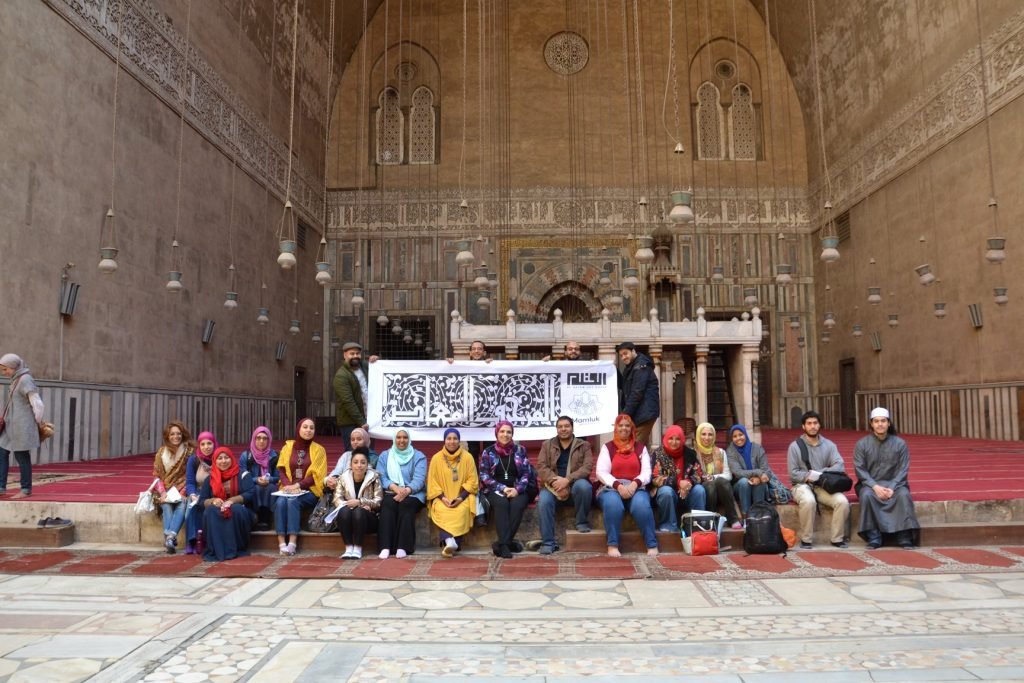
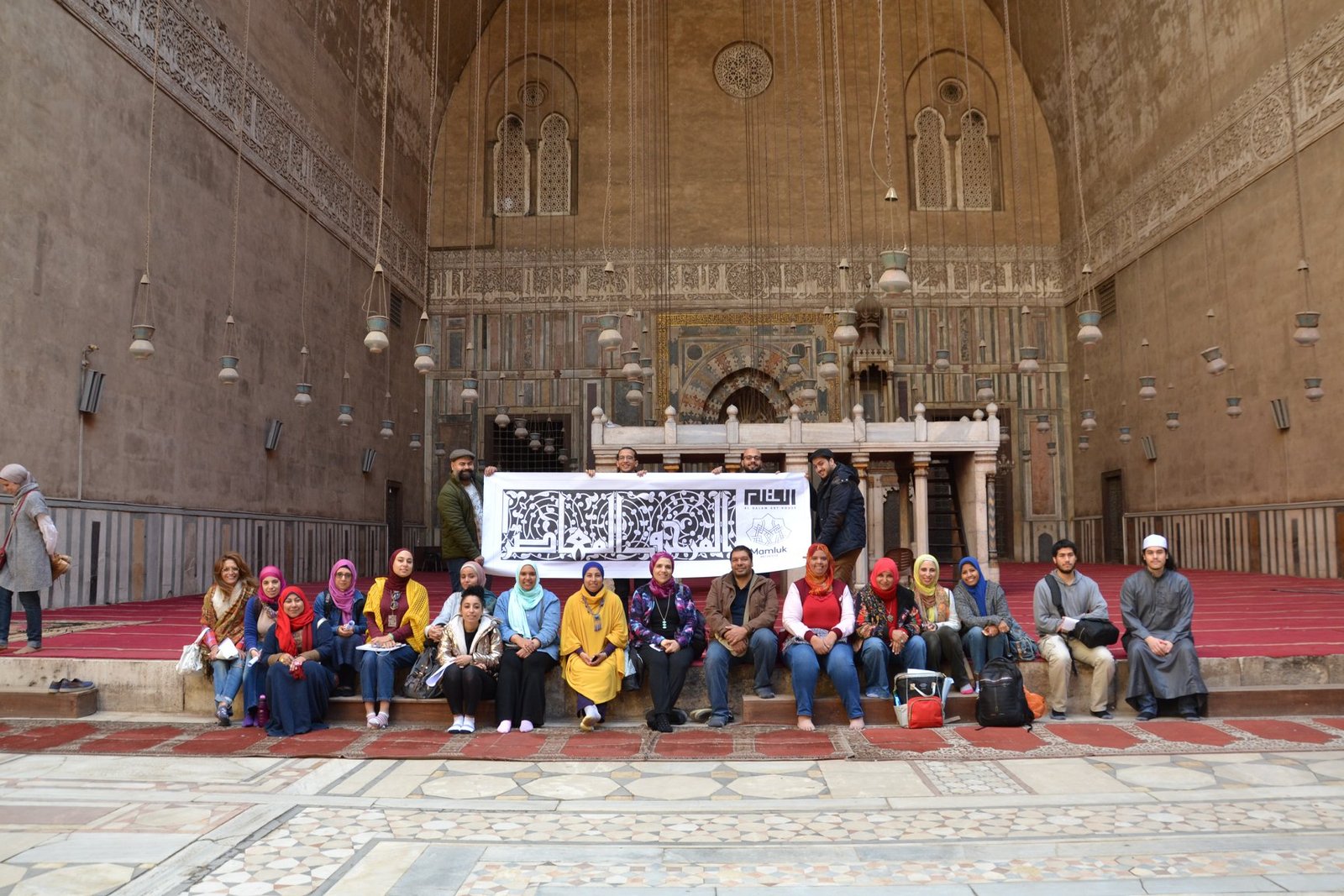
The program included many research field visits accompanied by artists and academics. The tours covered the Mosque-Madrasa of Sultan Hassan, the Mosque-Madrasa of Al-Nasir Muhammad ibn Qalawun, the Al-Rifa'i Mosque, the Mosque of Ahmed ibn Tulun, the Museum of Islamic Art, and the Egyptian National Library and Archives at Bab El-Khalq.
– Lectures
The program included lectures given by academics on: the history of ornamentation and its development through different eras, the schools of Mamluk ornament, the aesthetic and formative values of Islamic ornaments, ornamental elements in Islamic architecture, and ornamental designs based on the formative elements of heritage.
– Workshops
They included: a workshop on illumination and gold dissolving, an extended workshop on using Illustrator for floral ornaments, an extended workshop on using AutoCAD for geometric ornaments, and a workshop on using engraving and cutting machines (Laser Cutter / CNC).